

DEMOCRACY IN NIGERIA (1999–2025): A PROMISE UNFULFILLED
By Bashir Yahuza Malumfashi

__________
As Nigeria marks June 12 as Democracy Day, it presents more than a moment of remembrance — it is an invitation to reflect, to assess, and to ask hard questions: Has democracy truly transformed Nigeria, or has it merely changed the faces in power while the same problems persist?
__________
Since the return to civil rule on May 29, 1999, Nigeria has enjoyed over two decades of uninterrupted democracy, a historic achievement considering the country’s turbulent military past. But as we examine the lived realities of Nigerians today, in terms of poverty, insecurity, corruption, and social services — the democracy we celebrate often appears more symbolic than substantive.
√ Political Evolution: Elections Without Empowerment
Nigeria has successfully conducted six general elections since 1999. Notably, in 2015, the country witnessed a peaceful transfer of power from the ruling People’s Democratic Party (PDP) to the All Progressives Congress (APC) — a democratic milestone. Multiparty politics has become the norm, and civil society engagement has grown.
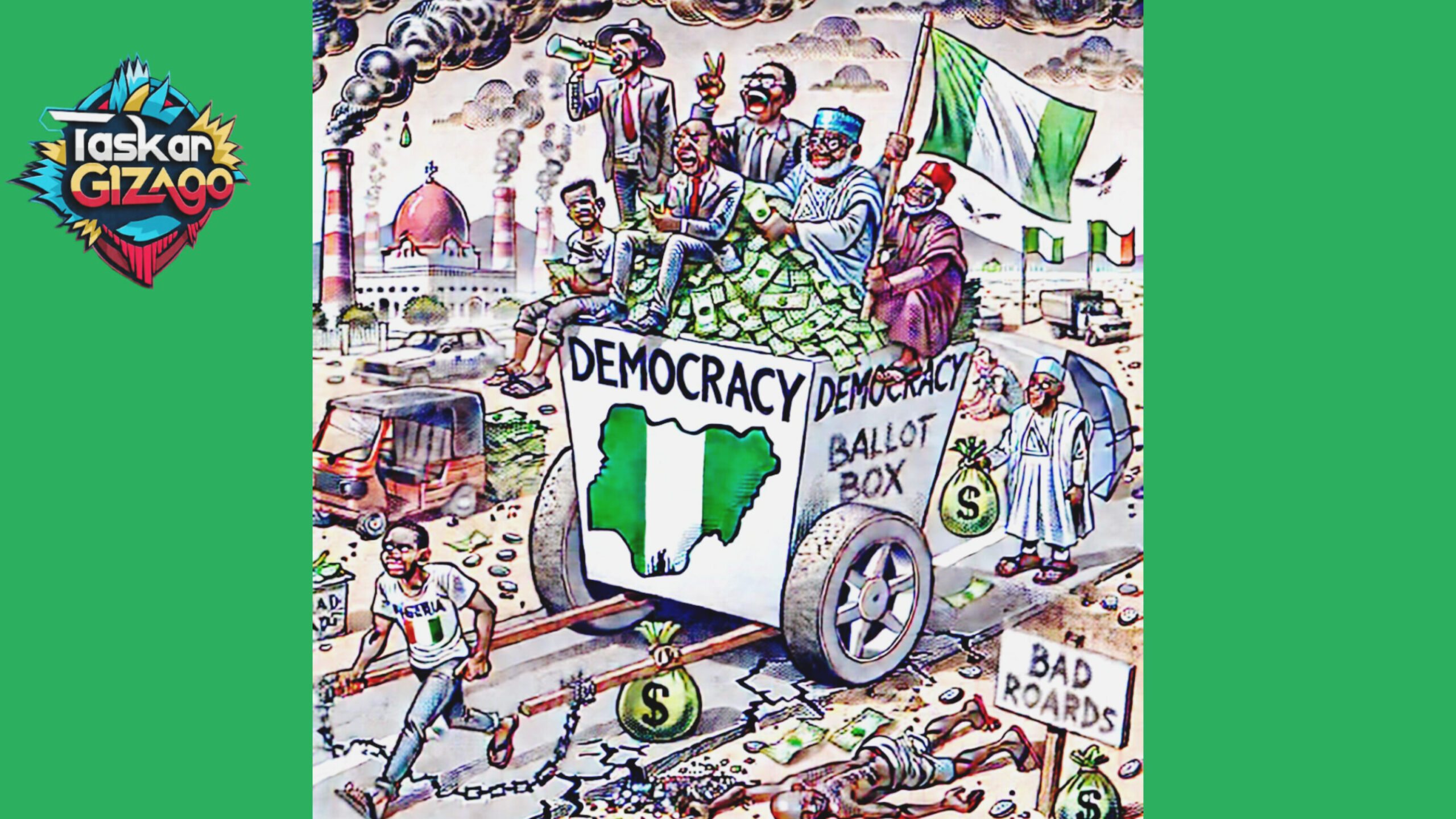
However, democracy in Nigeria remains elite-driven and heavily monetized. Electoral outcomes are too often determined by vote-buying, political godfathers, and legal battles rather than the will of the people. The disconnect between the political class and the electorate is stark, as leaders rarely emerge from or answer to grassroots structures.
√ The Poverty Paradox: Rich in Resources, Poor in Outcomes
Despite abundant natural resources, especially oil, over 60% of Nigerians still live in poverty, according to World Bank data. Youth unemployment and underemployment remain dangerously high, fueling migration, frustration, and insecurity.
Successive administrations have launched programs claiming to fight poverty, but few have been impactful. These schemes are often poorly managed, politicized, or mired in corruption. Economic growth has not translated into shared prosperity, and inequality continues to widen.
√ Corruption and Misgovernance: A Crisis of Integrity
Nigeria’s position in global corruption rankings remains troubling. Although anti-corruption bodies like the EFCC and ICPC exist, their efforts are frequently selective, politicized, or undermined by lack of judicial support and political will.
Squandermania, the reckless spending of public funds remains rife. While millions of citizens struggle for food, clean water, and healthcare, political elites enjoy lavish lifestyles funded by the public purse. The state’s resources are often looted or misallocated, deepening distrust in democratic governance.
√ Insecurity: Democracy Without Safety
One of the most glaring failures of Nigeria’s democracy has been its inability to provide security. In 1999, insecurity was relatively localized. Today, it is widespread and multifaceted: terrorism in the Northeast, banditry and kidnappings in the Northwest and North Central, herder-farmer clashes, separatist agitations in the Southeast, and armed robbery and cultism in the South.
Democracy is meaningless to people who live in fear. When the state cannot protect lives and property, the foundation of democratic governance is eroded.
√Social Services: Education and Infrastructure in Decline
Public education has suffered severe neglect, marked by strikes, underfunding, poor infrastructure, and declining standards. Healthcare services are under-equipped and underfunded, forcing even middle-class Nigerians to seek medical care abroad.
Infrastructure development is often announced with fanfare but executed poorly. Roads, power supply, and transportation remain unreliable. Projects are frequently stalled, abandoned, or inflated in cost.
√ Rule of Law and Civic Space: Progress Amid Regression
While civil liberties have seen some improvements especially in press freedom and digital activism, abuse of power and disregard for the rule of law persist. Court orders are regularly disobeyed. Activists and journalists are harassed or arrested for speaking out.
The #EndSARS protests of 2020 were a turning point, revealing deep-seated grievances among young Nigerians and the inability of the state to manage dissent responsibly.
Nigeria’s democracy is just in form, not in Substance. It has survived for over two decades, an achievement in itself but is still a democracy of form, not of substance. The ideals of freedom, equity, justice, and accountable governance remain aspirations, not realities. June 12, the day we celebrate, symbolizes the people’s demand for a government that listens, serves, and protects. Yet today, many feel democracy has become a system where the people vote, but their voices do not count. Unless democracy begins to deliver tangible dividends such as security, jobs, education, healthcare, and justice — it risks losing its moral authority and legitimacy in the eyes of the very people it claims to serve.
_______________
Bashir Malumfashi is the Editor-In-Chief, Taskar Gizago Magazine (online)