


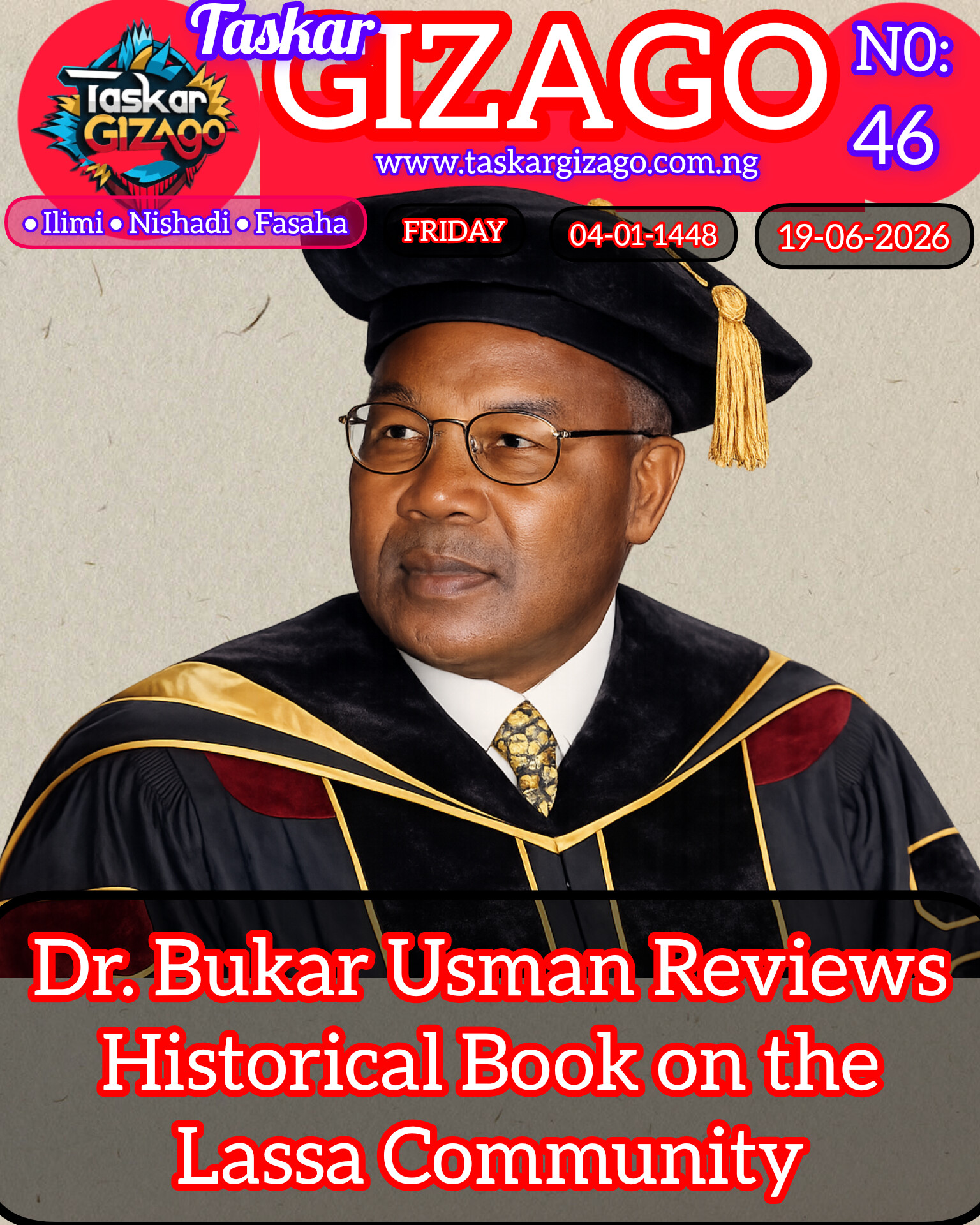
Dr. Bukar Usman Reviews Historical Book on the Lassa Community
By Bashir Yahuza Malumfashi

__________
Renowned folklorist, author and historian, Dr. Bukar Usman, OON, is set to review a newly published historical work titled A History of Lassa.
The book is described as a significant contribution to historical documentation, cultural preservation and the understanding of the rich heritage of the Lassa community.
Authored by Abdulkadir Gambo Gadzama, the book will be formally presented at the National Women Development Centre, Tafawa Balewa Way, Central Business District, Abuja, on Saturday, June 27, 2026, at 10:00 a.m.
The event is expected to attract prominent personalities from government, academia, traditional institutions and various professional backgrounds.
Dr. Usman, the current President of the Nigerian Folklore Society has been invited to serve as the official reviewer of the book following a formal request conveyed in a letter dated June 9, 2026 by the Planning Committee for the launch.
In the invitation letter, the committee noted that Dr. Usman’s distinguished contributions to historical scholarship, literature, culture and national intellectual discourse make him the ideal choice to review the publication.
In its remarks, the committee commended the author for undertaking years of painstaking research and producing a work that chronicles the history, traditions and development of Lassa Town. It noted that the publication would serve as an important reference resource for researchers, students, policymakers and future generations interested in understanding the historical evolution of the community.
According to the committee, historical works such as A History of Lassa play a crucial role in preserving collective memory and strengthening cultural identity. It emphasized the importance of documenting local histories to ensure that valuable traditions, experiences and achievements are not lost over time.
The committee further observed that the book provides a compelling narrative of the Lassa people and their contributions to the social, cultural and political development of the region.
It also praised the author’s commitment to accuracy, research and historical analysis, describing the publication as a valuable addition to Nigeria’s growing body of indigenous historical literature.
The launch ceremony will be led by the Executive Governor of Adamawa State, Rt. Hon. Ahmadu Umaru Fintiri, as the Lead Launcher. The governor, who also bears the traditional title of Shashilgar Margi, is among the distinguished personalities expected to grace the occasion.
The event will be chaired by Chief Joe Kyari Gadzama, SAN, the Sardaunan Uba, while Maj. Gen. Dr. Paul C. Tarfa (Rtd), the Yeriman Garkida, will serve as the Father of the Day. The Chairlady of the occasion is Mrs. Asta P. Thahal, the Gimbiyan Garkida, while Mrs. Parmata Ishaya will serve as the Mother of the Day.
On behalf of the Planning Committee, Chairman CP Samson V. Wudah (Rtd) and Secretary Raymond Gadzama expressed their anticipation of strong support and participation from invited guests. They noted that the publication of A History of Lassa represents an important milestone in efforts to preserve the history and cultural heritage of the community for future generations.
The ceremony is expected to bring together policymakers, academics, technocrats, traditional rulers, professionals and members of the public, making it an intellectually enriching and culturally significant gathering.
“The author deserves commendation for documenting the history of Lassa and contributing to the broader national effort to preserve Nigeria’s diverse historical heritage,” the Committee Chairman said, noting that the successful publication of A History of Lassa underscores the growing recognition of the importance of local history in nation-building and cultural preservation.
The committee expressed the hope that the publication would inspire similar initiatives across the country aimed at documenting the histories of communities whose stories have remained largely untold.
The book is expected to serve as an enduring resource for scholars and readers seeking deeper insight into the origins, traditions and historical development of the Lassa community.
__________