

Exposing Plans of Fake Hausa Activists & Ba-Zata Mischief Mongers to Cause Confusion and Discord in Northern Nigeria (11)
By Bashir Yahuza Malumfashi
Related posts


_______________
√ Who Dare Separate the Hausa and Fulani?
Esteemed readers who have been patiently following this long commentary, I greet you with respect and dignity. May peace, mercy and blessings of Allah be upon you all.
In the previous (10th) part of this series, we examined the question, who is a “pure Hausa” in today’s world? Now, we turn to another critical issue; who in this present time, can wake up, beat his chest and claim the ability to separate the Hausa and Fulani relationship? Indeed, in this modern era of progress, is it tribalism that we need or unity among people?
As we discussed earlier, in this 21st century, a time the world has effectively become a global village, our society does not need tribalism as a guiding principle of life, if indeed progress and peaceful coexistence are truly desired. This is especially evident in how every individual today depends on interaction, cooperation and engagement with others, regardless of language, ethnicity or place of origin. In essence, we all need one another.
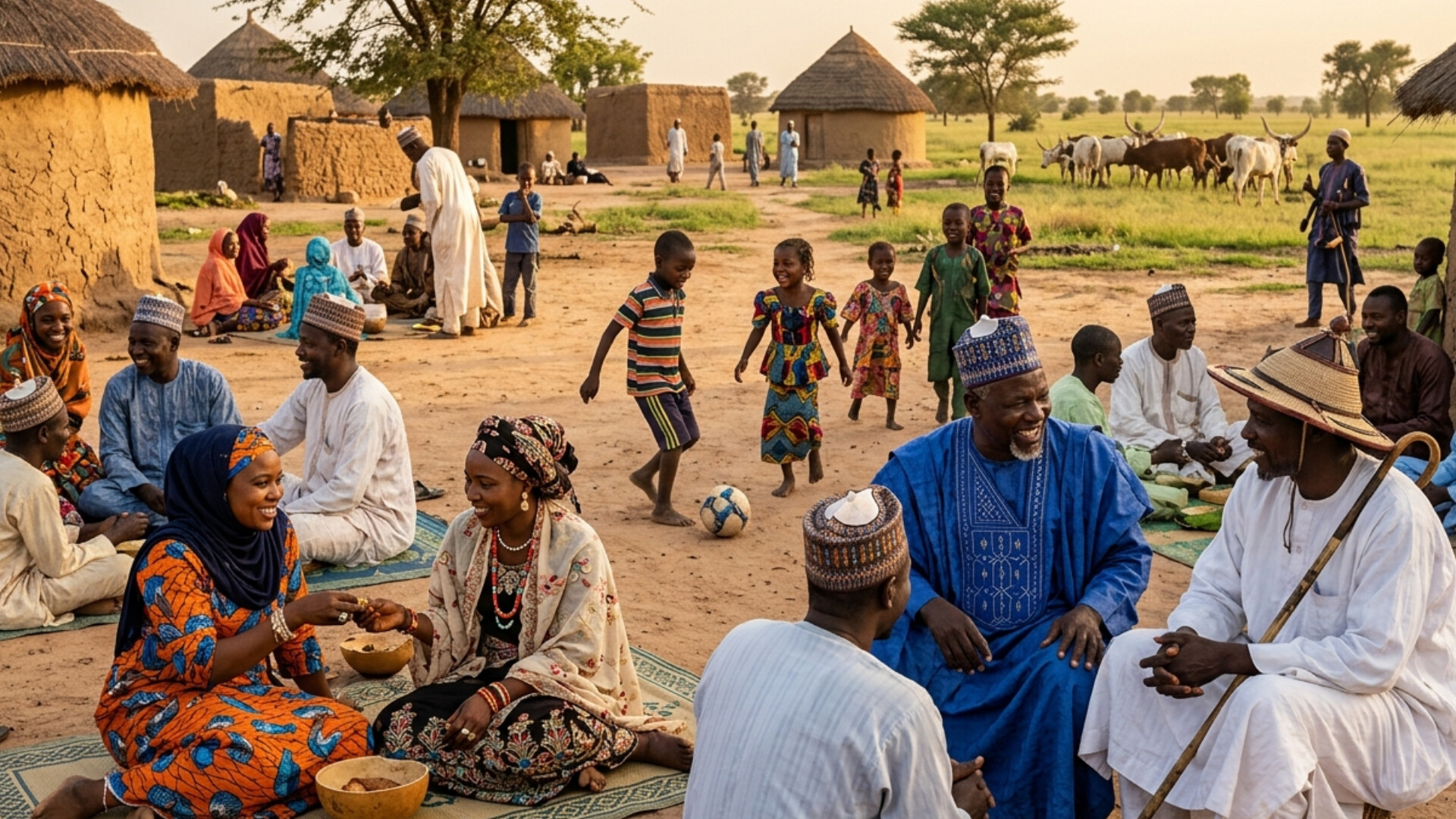
Let us ask again: Who can truly separate the Hausa and Fulani peoples, especially in Northern Nigeria? This is an extremely difficult, almost impossible task. It’s just like attempting the unimaginable. The reason is simple, over centuries of coexistence, these two communities have become deeply intertwined. Intermarriages have taken place across generations to the extent that in nearly every Fulani household one finds Hausa lineage and likewise, in almost every Hausa household, Fulani ancestry is present.
Another significant factor is that, in contemporary times, almost everyone in the North can be considered “Hausa” in a cultural sense because the Hausa language has become a lingua franca, a necessary medium of communication. If one were to attempt to isolate “Hausa people” today, a vast majority of the population would fall into that category, even if their ancestral languages were not Hausa. Many individuals today do not even speak any other language fluently besides Hausa.
Furthermore, there exists a powerful and deeply binding force that unites the Hausa and Fulani peoples, especially in Northern Nigeria. That force is Islam. In the North, the overwhelming majority of Hausa people are Muslims with only a small minority adhering to Christianity or traditional beliefs. The same applies to the Fulani, most are Muslims, with only a very small fraction belonging to other faiths.
Since both Hausa and Fulani populations are predominantly Muslim, their unity is already firmly established. There is no need to revert to ignorance, whether in the form of tribalism or pre-Islamic practices. Islam has brought them together as one family, one brotherhood with shared values and moral conduct. It rescued them from the darkness of ignorance and explicitly forbade tribalism. Thus, Hausa and Fulani do not need ethnic discrimination. If they embrace it, they regress, abandoning light for darkness and turning away from Islam toward ignorance.
The Hausa and Fulani, most of whom are Muslims have a clear guiding framework (Islam). Allah (SWT) and his Messenger, Prophet Muhammad (SAW) have prohibited tribalism because of its harmful effects on society. Tribalism produces nothing beneficial. It only breeds division, hostility and conflict among people.
Let Hausa and Fulani Muslims consider what Allah says in the Glorious Qur’an, in Surah Al-Hujurat (49:13): “O mankind! Indeed, We created you from a male and a female and made you into nations and tribes so that you may know one another. Indeed, the most honored of you in the sight of Allah is the most righteous of you. Indeed, Allah is All-Knowing, All-Aware.”
The meaning of this verse is clear. Allah created human beings as diverse peoples and tribes so that they may recognize and understand one another, not so that they may despise or fight each other. The most honored among people is the most God-conscious, not the one from a particular tribe. This shows there is no justification for a Fulani to hate a Hausa person, nor for either to consider themselves superior. No one is better than another except in piety. Therefore, what is required of them is unity, cooperation and mutual understanding in their daily lives.
Allah also says in Surah Al-Imran (3:103): “And hold firmly to the rope of Allah all together and do not become divided. And remember the favor of Allah upon you, when you were enemies and He brought your hearts together and you became brothers by His grace…”
Based on this verse, Fulani, Hausa and indeed all Muslims, regardless of tribe are brothers and sisters. They are commanded to abandon tribalism and remain united under the banner of Islam, built on mutual love and solidarity.
Furthermore, the Messenger of Allah (SAW), the guide of humanity toward righteousness, said in a hadith reported by Abu Dawud (No. 5117): “He is not one of us who calls to tribalism, fights for tribalism, or dies upon tribalism.”
This clearly indicates that it is forbidden for a Fulani, Hausa, Arab or any other person to take up arms and kill someone simply because they belong to a different tribe. In Islam, there is no room for hatred, conflict or discrimination based on ethnicity.
In another hadith reported in Sahih Muslim (No. 2584), it is narrated that: “The companions once began disputing based on tribal affiliations (the Ansar and the Muhajirun), and the Prophet (SAW) said: ‘Leave it, for it is a foul thing.”
Islam forbids the formation of groups or alliances based solely on tribal identity when such formations lead to division or hostility. Allah and His Messenger prioritize unity based on truth and righteousness over blood ties or ethnic identity. This also serves as a warning. Those Fulani individuals who take up arms and kill innocent people are in clear error. Likewise, it is wrong for any Hausa, European, Yoruba or Igbo person to form an organization with the aim of hostility or violence against another ethnic group.
At this point, I call upon Hausa Muslims and Fulani Muslims to recognize that Islam is their true guide, not tribalism. They must guard themselves against any corrupt influence that seeks to mislead them into conflict. May Allah guide us to what is right and may we love one another for His sake. Ameen.
__________