

No, There Is No Global Shortage of Men: Fact-Checking the Viral #UN Claim
By Bashir Yahuza Malumfashi
Related posts


_________
A message circulating widely on social media claims that men are now in critically short supply around the world and attributes a series of astonishing demographic figures to the United Nations. The message claims that there are only 2.2 billion men compared with 5.6 billion women among the world’s 7.8 billion people and that, after excluding married men, prisoners, sick men and other categories, only about one billion men are supposedly “available for marriage.” However, a review of official United Nations population data shows that these figures are not contained in any genuine UN demographic report and that the central claim is fundamentally misleading.
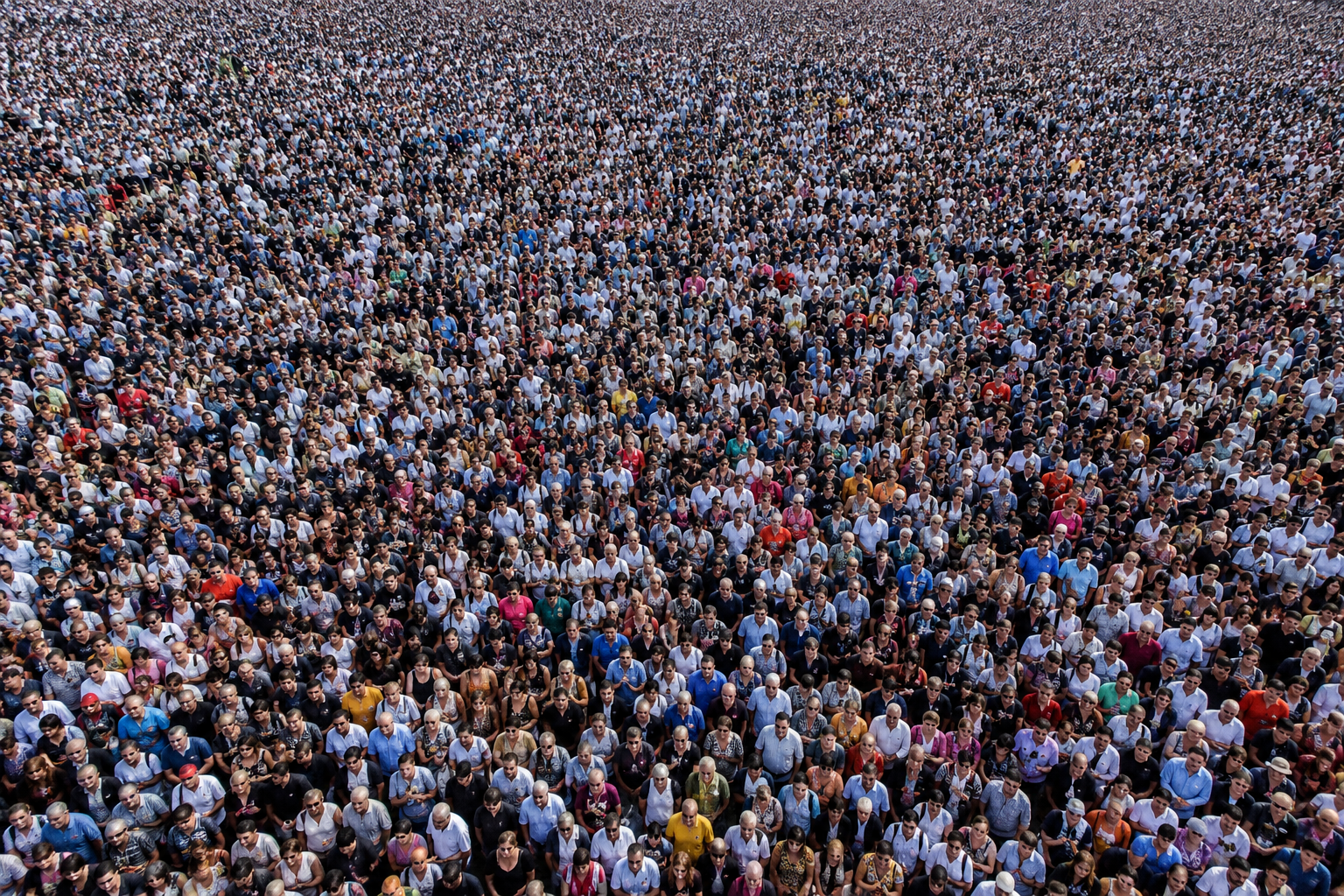
According to the United Nations’ World Population Prospects 2024, the world population was approximately 8.2 billion in 2024, not 7.8 billion. The UN’s demographic projections put the global population at roughly 8.2 billion in 2025 as well. More importantly, the world is not composed of 5.6 billion women and 2.2 billion men. UN demographic data show that the global population is broadly divided between males and females, with slightly more males than females overall. In 2025, the estimated global sex ratio was approximately 101 males for every 100 females, meaning that the worldwide male population was actually slightly larger than the female population.
This immediately disproves one of the most prominent claims in the viral message. Rather than having 2.2 billion men and 5.6 billion women, the world had approximately 4.1 billion males and 4.1 billion females in 2025. The difference between the two sexes at the global level is relatively small. Nevertheless, the demographic balance changes considerably from one country and age group to another. Some countries have more men than women, while others have more women. At older ages, women generally become more numerous because women tend, on average, to live longer than men. Consequently, a statement about the global population cannot automatically be used to describe the availability of marriage partners in a particular society.
The viral message also claims that the United Nations advised women to be careful about how they treat men because there is supposedly a shortage of men. There is no credible evidence that the UN issued such advice. The organisation’s World Population Prospects focuses on demographic issues such as population growth, fertility, mortality, migration, ageing and population structure. It is not a marriage guide and does not instruct women to respect men because there are supposedly only one billion men available for marriage. The wording of the viral message therefore appears to be a social-media creation that has been falsely attributed to the United Nations in order to give it greater authority.
The other statistics in the message are equally problematic. It claims that, out of 2.2 billion men, one billion are married, 130 million are in prison and 70 million suffer from mental-health problems or various illnesses, before making further deductions for unemployment, sexual orientation, religious occupation, family relationships and age. There is no evidence that these figures come from a UN demographic report. More importantly, the methodology itself is fundamentally flawed. These categories overlap: a man can be married and unemployed; he can be a father and over 65; he can be ill and employed and a person can belong to several categories simultaneously. Therefore, subtracting such groups from the total male population does not produce a legitimate estimate of men “available for marriage.”
The claim also illustrates how social-media misinformation can mix a small amount of truth with large amounts of fiction. It is true that demographic differences between men and women exist in different parts of the world. It is also true that some countries have significant sex imbalances, particularly within certain age groups. But that does not mean there is a worldwide shortage of men. At the global level, the UN data actually indicate a slight male majority, while women become increasingly predominant in older age groups. Understanding these differences requires proper demographic analysis rather than viral calculations that simply add and subtract unrelated categories.
The appropriate conclusion, therefore, is that the message should not be described as a United Nations report or recommendation. Its headline assertion that “men are in short supply worldwide” is unsupported by the UN’s global population figures and the accompanying statistics about married men, prisoners, mental-health problems, unemployment, homosexuality, Catholic priests and older men do not constitute a credible demographic calculation. Men and women should certainly treat one another with dignity, consideration and respect but that principle does not require fabricated statistics to justify it. In an age when information travels around the world within seconds, the responsibility to verify a sensational claim before sharing it has become more important than ever. The viral “UN report” may make an interesting social-media message, but it should not be mistaken for genuine United Nations demographic research.
__________